Sentence Architecture: Building Syntactic Awareness in Years 3–6

Photo: Calistemon, CC BY-SA 4.0, via Wikimedia Commons
Beyond Subject, Verb, Object
The KS2 National Curriculum asks teachers to develop pupils who can use 'varied and inventive' sentence structures — a phrase that appears straightforward but conceals considerable complexity. What does it actually mean to vary a sentence structure? What cognitive processes are involved when a writer chooses to open with a subordinate clause rather than a main clause, or decides to place an adverbial in an unexpected position for rhetorical effect? And how do we teach those processes explicitly, rather than hoping they emerge through exposure alone?
The answer lies in what linguists call syntactic awareness: the ability to perceive and manipulate the grammatical architecture of sentences, independent of their meaning. This is a skill that skilled readers and writers deploy constantly and largely unconsciously — but which can be made visible, teachable, and genuinely transformative when brought to the surface of classroom practice.
Why Syntactic Awareness Matters for Reading
Before addressing writing, it is worth establishing the reading case. Comprehension difficulties in upper KS2 frequently arise not from unfamiliar vocabulary but from unfamiliar syntax. A pupil who can define every word in a complex sentence may nonetheless fail to extract its meaning if the sentence's grammatical structure is one they have not encountered before.
Consider a sentence such as: Exhausted by the journey but unwilling to stop, she pressed on through the darkening wood. The meaning is not obscure. But a reader who has not encountered the pattern of paired participial phrases preceding a main clause may struggle to process it fluently, even if they know what 'exhausted', 'unwilling', and 'pressed on' each mean individually.
Research in reading science supports this observation. Syntactic processing — the ability to parse grammatical structure quickly and automatically — is increasingly recognised as a significant component of reading comprehension, particularly for the more complex texts that pupils encounter in Years 5 and 6. Developing this capacity explicitly in the classroom is therefore not merely a writing enrichment activity; it is a core comprehension intervention.
Sentence Imitation: The First Step
The most accessible entry point into syntactic awareness is structured sentence imitation — an approach with roots in classical rhetorical education that has found renewed support in contemporary literacy research.
The process is straightforward. Pupils are presented with a sentence from a quality text and asked to write a new sentence that replicates its grammatical pattern while substituting entirely different content. The teacher's role is to make the underlying structure visible before pupils attempt the imitation.
For example, the sentence Although the rain had not yet stopped, the children decided to venture outside can be analysed as: [concessive subordinate clause] + [main clause with compound verb phrase]. Pupils then generate their own examples: Although she had promised herself she would not look, Maria could not resist glancing at the letter. The content is their own; the architecture is borrowed and, through repetition, internalised.
This technique works best when sentences are drawn from texts already familiar to pupils — ideally from the class novel or a recently studied poem — because the meaningful context reinforces engagement. It also works well as a brief daily activity rather than an extended lesson: five minutes of focused sentence play, consistently applied, yields more durable syntactic flexibility than occasional extended grammar sessions.
Sentence Expansion: Adding Complexity Deliberately
Once pupils are comfortable with imitation, sentence expansion activities develop the capacity to add grammatical layers to simple structures in purposeful, controlled ways.
Begin with a simple kernel sentence: The dog barked. Pupils are then invited to expand it through a series of structured additions — not merely by appending adjectives, which is the most common and least syntactically interesting approach, but by adding clausal and phrasal elements at different positions within the sentence.
Where can we add information before the subject? (Every night at midnight, the dog barked.) After the verb? (The dog barked until its voice gave out.) In an embedded position? (The dog, startled by a sound no human could detect, barked.) Each variation creates a different rhythmic and semantic effect, and discussing those effects with pupils builds the metalinguistic vocabulary they need to make deliberate choices in their own writing.
Teachers should resist the temptation to evaluate expansions as better or worse than the original. The pedagogical goal is to establish that the same kernel can be developed in multiple directions, each with distinct effects — a concept that directly counteracts the tendency of many KS2 writers to settle for the first grammatical option that comes to mind.
Sentence Deconstruction: Reading Like a Linguist
The complementary activity to expansion is deconstruction: taking complex sentences apart to identify how they have been assembled. This is particularly valuable for developing reading comprehension, as it gives pupils a strategy for approaching sentences that initially resist understanding.
A structured deconstruction protocol might proceed as follows. Pupils first locate the main clause — the grammatical core of the sentence that could stand alone. They then identify any subordinate clauses, noting the subordinating conjunctions that signal them. Finally, they identify any phrases (participial, prepositional, appositive) that are attached to the main structure without being clauses in their own right.
This analytical work is most effective when it is applied to genuine literary sentences rather than decontextualised grammar exercises. A sentence from Michael Morpurgo, Malorie Blackman, or Katherine Rundell will typically be more syntactically interesting and more motivating to analyse than anything produced for a grammar worksheet — and the process of analysis deepens pupils' engagement with the text itself.
 Photo: Katherine Rundell, via duffcooperprize.org
 Photo: Malorie Blackman, via ichef.bbci.co.uk
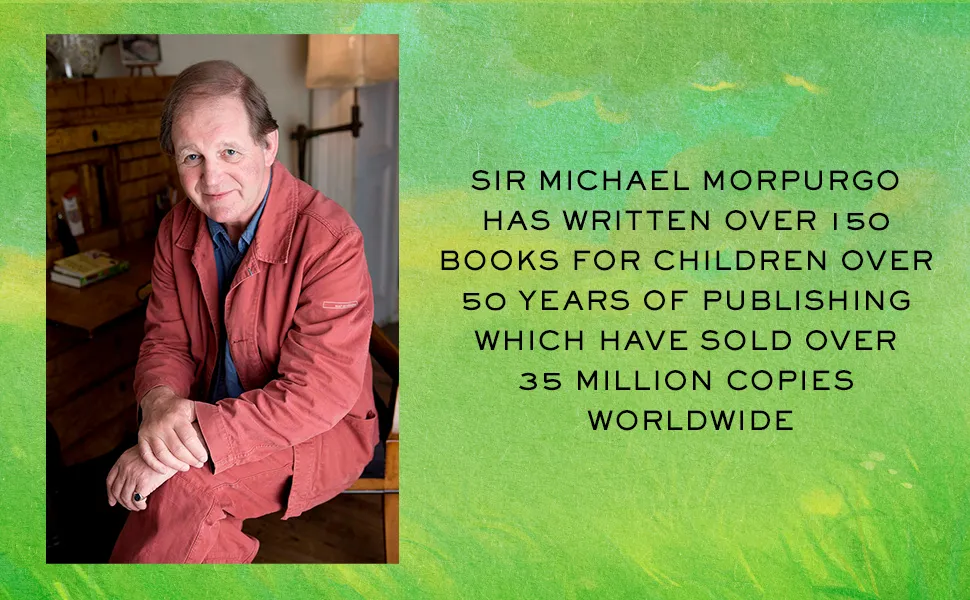 Photo: Michael Morpurgo, via m.media-amazon.com
Linking Syntactic Work to the National Curriculum
Teachers concerned about curriculum alignment can be reassured that explicit syntactic instruction directly supports a number of statutory requirements. The KS2 programme of study calls for pupils to use 'a wide range of clause structures, sometimes varying their position within the sentence', to 'use subordination and co-ordination', and to 'recognise vocabulary and structures that are appropriate for formal speech and writing'. Syntactic awareness work addresses all of these requirements — but does so in a context of genuine compositional purpose rather than isolated grammatical labelling.
The distinction matters. Knowing that a clause is subordinate is of limited value unless a pupil also knows what effects different placements of that clause might create, and has had sufficient practice manipulating those placements to deploy them fluently under the conditions of independent writing.
A Classroom Culture of Sentence Curiosity
Perhaps the most significant shift that syntactic awareness work requires is cultural rather than pedagogical. Pupils need to develop the habit of noticing sentences — of pausing over an unusually constructed sentence in a shared text and asking, genuinely and with interest, how it has been made.
This habit is best modelled by teachers who are themselves curious about sentence architecture. When a teacher reads aloud and stops to say, 'I want to go back to that sentence — did you notice how it started? Let's look at what the writer did there,' they communicate that sentences are not merely transparent vehicles for meaning but objects of interest in their own right.
Over time, this orientation towards language — attentive, analytical, and genuinely curious — is one of the most valuable things a KS2 literacy classroom can cultivate.