The Living Stimulus: Using Britain's Seasonal Shifts to Build a Year-Round Descriptive Writing Culture in KS2

Photo: Geoff Charles, CC BY-SA 4.0, via Wikimedia Commons
A Stimulus That Renews Itself Every Twelve Weeks
Teachers spend considerable time and energy sourcing fresh stimuli for descriptive writing — photographs, objects, film clips, music. Yet one of the most vivid and consistently underused resources available to every KS2 classroom in Britain costs nothing and arrives reliably, four times a year, outside the school window.
The British seasonal calendar is, by any literary measure, dramatic. From the saturated greens and sudden downpours of a British spring to the low amber light and leaf-rot of October, from the stark silences of a January frost to the insistent heat haze of a rare July afternoon, the natural world offers KS2 pupils a constantly shifting palette of sensory experience. When teachers connect this experience to structured observation, purposeful vocabulary work, and the rich tradition of British nature writing, seasonal change becomes not merely a backdrop to the curriculum but a living, breathing writing stimulus that grows in depth and complexity across the year.
Autumn: Decay, Transformation, and the Language of Change
For most school years, the first significant season is autumn, and it arrives with immediate generosity. The school grounds in September and October are rarely dull: leaves shifting from green to amber to rust, the smell of damp soil after rain, the shortening of afternoons and the first appearance of morning mist.
An outdoor observation walk in early October, conducted in deliberate silence and followed by five minutes of uninterrupted free writing, is an excellent opening activity for a seasonal writing journal. Equip pupils with a simple sensory recording sheet — columns for sight, sound, smell, touch, and an additional column for 'unexpected details' — and encourage them to note raw observations rather than polished sentences. This raw material becomes the basis for subsequent drafting work in the classroom.
Autumn also connects naturally to the KS2 objective of writing with varied and effective vocabulary. The language of autumnal decay — decomposition, withering, skeletal, amber, brittle — offers rich opportunities for deliberate word choices. Introducing pupils to the work of John Keats, whose ode 'To Autumn' remains one of the most celebrated pieces of nature writing in the English language, provides a literary mentor text that demonstrates how observation can be transformed into art.
 Photo: John Keats, via c8.alamy.com
Winter: Precision, Stillness, and the Art of Restraint
Winter writing presents a different challenge and, consequently, develops a different set of skills. The winter landscape is often characterised by absence — bare branches, empty fields, muted colours — and capturing that absence requires precision and economy of language rather than abundance.
This makes winter an ideal season for work on concise, exact description. Encourage pupils to write 'winter haiku' — not necessarily in strict syllabic form, but in the spirit of the form: three lines, one image, no unnecessary words. A frost-covered playground, the sound of a single bird in a bare tree, the particular quality of winter light at 3pm — these small, precise observations build the habit of looking closely that underpins all strong descriptive writing.
The winter months also connect to a rich tradition of British literary weather. Dickens's fog-bound London, the frozen Fens of Graham Swift's fiction, the bleak midwinter imagery of Christina Rossetti — these texts demonstrate to pupils that British writers have long understood the expressive power of cold, grey, and still.
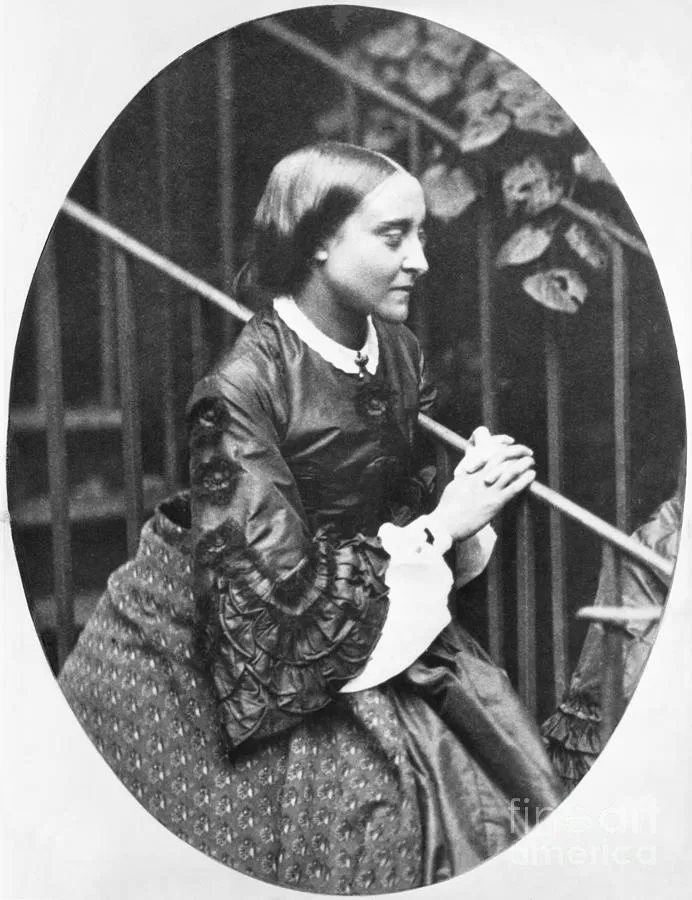 Photo: Christina Rossetti, via images.fineartamerica.com
Spring: Renewal, Surprise, and the Challenge of Cliché
Spring is, paradoxically, one of the most difficult seasons to write well. The risk of cliché is high: bluebells, lambs, and new beginnings have been written about so many times that pupils often reach for familiar phrases rather than fresh observation.
This makes spring the ideal season to address cliché directly as a writing concept. Before the outdoor observation session, invite pupils to brainstorm every spring cliché they know — 'blossom-covered trees', 'birds singing cheerfully', 'new life everywhere' — and record them on a class display. The challenge then becomes to observe the actual spring environment and find language that nobody on the list has used.
This exercise develops a critical relationship with language that serves pupils across all genres. It also connects naturally to the KS2 objective of selecting vocabulary for effect, since avoiding cliché requires conscious, deliberate word choices rather than automatic ones.
Summer: Abundance, the Senses, and Extended Description
Summer, with its relative abundance of sensory detail, lends itself to more extended descriptive writing. The challenge here is not scarcity of material but selection and organisation: how does a writer choose which details to include, and in what order?
This makes summer an appropriate moment to address structural choices in descriptive writing — the decision to move from overview to close-up, from sound to silence, from movement to stillness. A summer garden, a school playing field at lunchtime, or the view from a classroom window on a hot July afternoon all offer sufficient complexity to sustain a multi-paragraph descriptive piece.
Summer also provides an opportunity to connect descriptive writing to the British tradition of pastoral literature. Extracts from Flora Thompson's 'Lark Rise to Candleford', Robert Macfarlane's accessible nature writing, or even the rural settings of beloved children's novels can help pupils understand that the British relationship with summer landscape has its own distinct literary register.
Building the Seasonal Writing Journal
The cumulative seasonal writing journal is the structural spine that holds this approach together across the year. Rather than treating each seasonal writing activity as a standalone task, the journal allows pupils — and teachers — to observe development over time.
Each entry should be dated and season-labelled. Pupils can revisit earlier entries to observe how their vocabulary has grown, how their sentences have become more varied, and how their capacity for precise observation has sharpened. At the end of the school year, the journal becomes a genuine record of both literacy development and the child's own relationship with the natural world — a document of genuine value that many pupils will wish to keep.
For teachers, the journal provides an organic assessment tool: a longitudinal record of descriptive writing development that sits alongside more formal assessment without replacing it. It also reinforces a simple but important truth about writing: that the best stimuli are often not manufactured but found, renewed by the world itself, season after season.