The Invisible Ceiling: Why Able Readers in KS2 Are Plateauing — and Five Strategies to Raise the Bar
The Comfortable Plateau
There is a particular kind of able reader that most KS2 teachers will recognise. They decode fluently, choose books with apparent confidence, complete comprehension tasks with ease, and rarely cause concern in reading assessments. They are, by almost every conventional measure, doing well.
And yet something is missing. Ask them why a character behaved as they did, and they will offer the most obvious explanation. Invite them to consider how an author has constructed tension, and they will describe events rather than technique. Present them with a morally ambiguous narrative and they will seek a clear resolution rather than sitting with the discomfort of ambiguity. These pupils are reading at the surface of texts that could take them much deeper — and the reason, more often than not, is that nobody has shown them the way down.
The comfortable plateau is one of the most significant — and least discussed — challenges in KS2 literacy provision. It is easy to overlook because these pupils are not struggling. They are not disengaged. They are simply not being challenged to grow.
Why Independence Is Not Enough
The most common response to high attainment in reading is to grant independence: a more challenging book, a quieter corner, fewer interruptions. This is understandable given the competing demands on teacher attention, but it rests on a flawed premise — that able readers, because they can read, do not need to be taught.
In reality, the skills that distinguish a competent reader from a genuinely analytical one are not acquired through volume of reading alone. They require explicit instruction, guided questioning, and sustained exposure to texts that resist easy interpretation. Without this, able readers develop fluency without depth, and confidence without critical rigour. They become very good at reading the kinds of texts they have already mastered, rather than developing the tools to encounter unfamiliar literary territory.
This is not a failure of the pupils. It is a gap in provision.
Strategy One: Replace Familiar Texts With Structurally Challenging Ones
Able readers in KS2 are often given longer or more lexically complex texts as a form of stretch. Length and vocabulary, however, are not the same as structural or thematic complexity. A more effective challenge is to introduce texts that disrupt expectations: non-linear narratives, unreliable narrators, stories told from multiple perspectives, or texts in which the moral landscape is genuinely unclear.
British children's literature offers excellent examples. Patrick Ness's work, Siobhan Dowd's novels, or the more challenging short stories of Philip Pullman all present able KS2 readers with structural and thematic complexity that rewards careful, repeated reading. The teacher's role is not simply to assign these texts but to guide pupils through the disorientation they may initially produce — modelling the process of sitting with uncertainty and using it as a reading tool rather than a problem to be resolved.
 Photo: Philip Pullman, via theoxfordmagazine.com
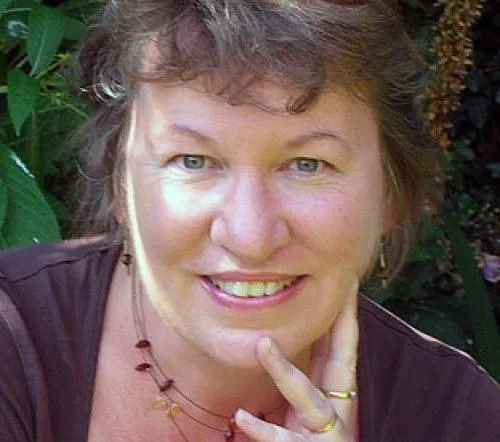 Photo: Siobhan Dowd, via alchetron.com
 Photo: Patrick Ness, via newbooksalert.com
Strategy Two: Teach the Language of Literary Analysis Explicitly
Able readers often possess intuitive responses to texts that they lack the vocabulary to articulate. They may sense that a passage is unsettling without being able to explain how the author has created that effect. Explicitly teaching the language of literary analysis — authorial intent, narrative perspective, structural choice, thematic tension — gives these pupils the tools to externalise and develop their thinking.
This does not require the introduction of A-level literary criticism into the primary classroom. It does require a consistent, cumulative vocabulary of analysis: terms such as 'foreshadowing', 'narrative voice', 'motif', 'ambiguity', and 'structural contrast', introduced in context and revisited across multiple texts. When able readers have this vocabulary available to them, their discussions deepen and their written responses become considerably more sophisticated.
Strategy Three: Design Questions That Have No Single Answer
Much of the questioning that able readers encounter in KS2 — even challenging questioning — is designed to elicit a correct response. Inference questions have answers; character analysis has preferred interpretations. Genuinely stretching questions, by contrast, are those to which thoughtful, well-evidenced disagreement is possible.
'Do you think the author wants us to sympathise with this character?' is a more powerful question than 'How does the author make us feel about this character?' because it invites the reader to take a position and defend it. 'Is this a hopeful ending or a sad one?' is more generative than 'How does the story end?' because it requires evaluation rather than recall. Designing a bank of these genuinely open questions for the texts your able readers encounter is one of the most efficient investments a teacher can make.
Strategy Four: Introduce the Practice of Comparative Reading
One of the most powerful tools for developing critical reading is comparison — placing two texts in dialogue with each other and asking how they illuminate or complicate one another. Able KS2 readers are rarely given this opportunity, yet it is precisely the kind of thinking that stretches beyond single-text comprehension into genuine literary understanding.
Comparison need not be elaborate. Two poems on the same theme written in different centuries; two picture books that handle grief differently; a chapter from a classic novel alongside a contemporary retelling — any of these pairings creates the conditions for comparative thinking. The teacher's role is to provide the framework: what are we comparing, what questions are we asking, and what do the differences tell us?
Strategy Five: Create Challenge Without Creating Hierarchy
A legitimate concern about providing enhanced provision for able readers is that it can inadvertently create a visible hierarchy within the classroom — a group of pupils who receive 'better' books and more interesting questions while others are implicitly marked as less capable. This concern is worth taking seriously, because an exclusionary reading culture undermines the broader goal of building a community of readers.
The solution is not to withhold challenge from able readers but to ensure that challenge is embedded in the culture of the whole classroom. Open-ended questions, morally complex texts, and the language of literary analysis should be available to all pupils, with scaffolding adjusted to support those who need it. The most able readers can then move further into this shared territory rather than being extracted from it into a separate provision.
When stretch and challenge are woven into everyday classroom reading culture, able readers benefit without being isolated — and the entire class is enriched by the quality of thinking that results.
Raising the Ceiling for Every Reader
The pupils described at the beginning of this article — fluent, confident, comfortable — deserve more than the plateau they are currently offered. They deserve teachers who see their apparent ease not as a signal to step back but as an invitation to go further. The strategies outlined here are not complex or resource-intensive. They require, above all, a shift in perspective: the recognition that able readers are not finished products but developing thinkers who need, just as much as any other pupil, a teacher who believes there is always further to go.