Interrogating the News: A Framework for Critical Media Reading in Years 5 and 6

Photo: Mark Stevenson , CC BY-SA 2.0, via Wikimedia Commons
Why News Literacy Belongs in the KS2 Literacy Classroom
In an information environment characterised by competing narratives, algorithmically curated feeds, and the rapid circulation of unverified content, the ability to read media texts critically is no longer an optional enrichment activity. It is a foundational literacy skill. Yet the primary curriculum has been relatively slow to make space for it, and many KS2 teachers remain uncertain about how to introduce news media in ways that are purposeful, age-appropriate, and genuinely analytical rather than merely topical.
The good news — if the phrase may be permitted — is that the resources already exist. Publications such as First News, the UK's best-selling children's newspaper, and digital platforms including the BBC's Newsround offer carefully produced journalism aimed squarely at the primary age range. These are not simplified adult newspapers; they are editorially distinct products, designed with young readers in mind, that nonetheless employ the full range of journalistic techniques — headline construction, story selection, quotation, framing — that characterise media texts more broadly.
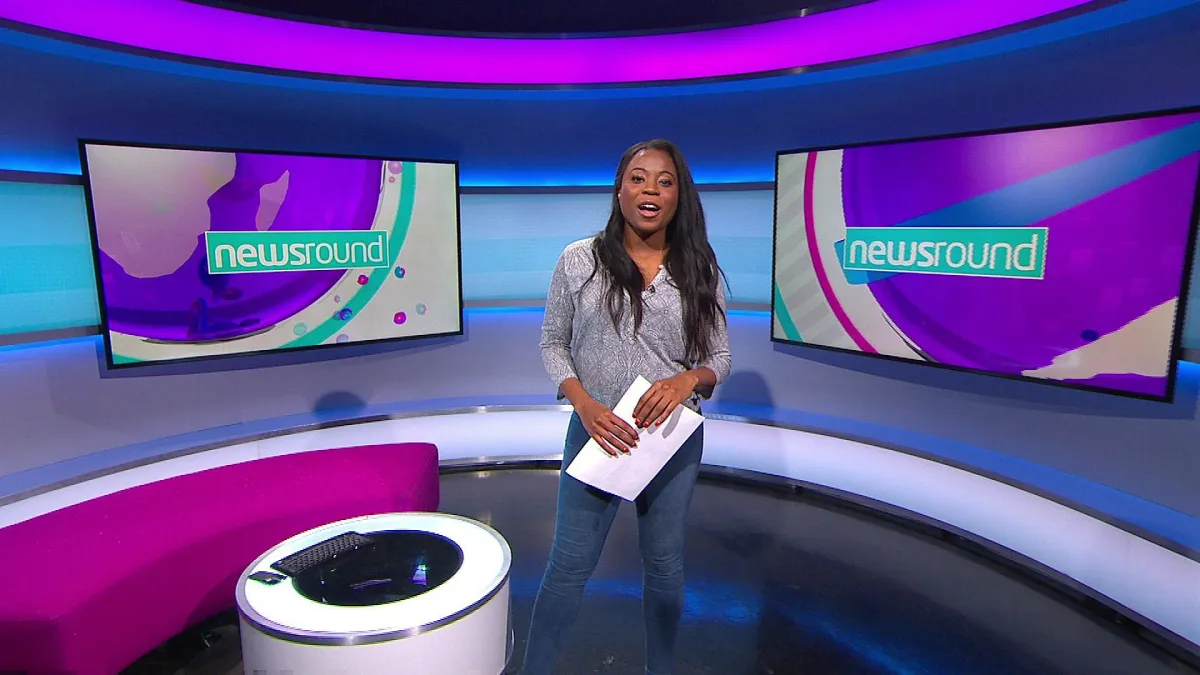 Photo: BBC Newsround, via facts.net
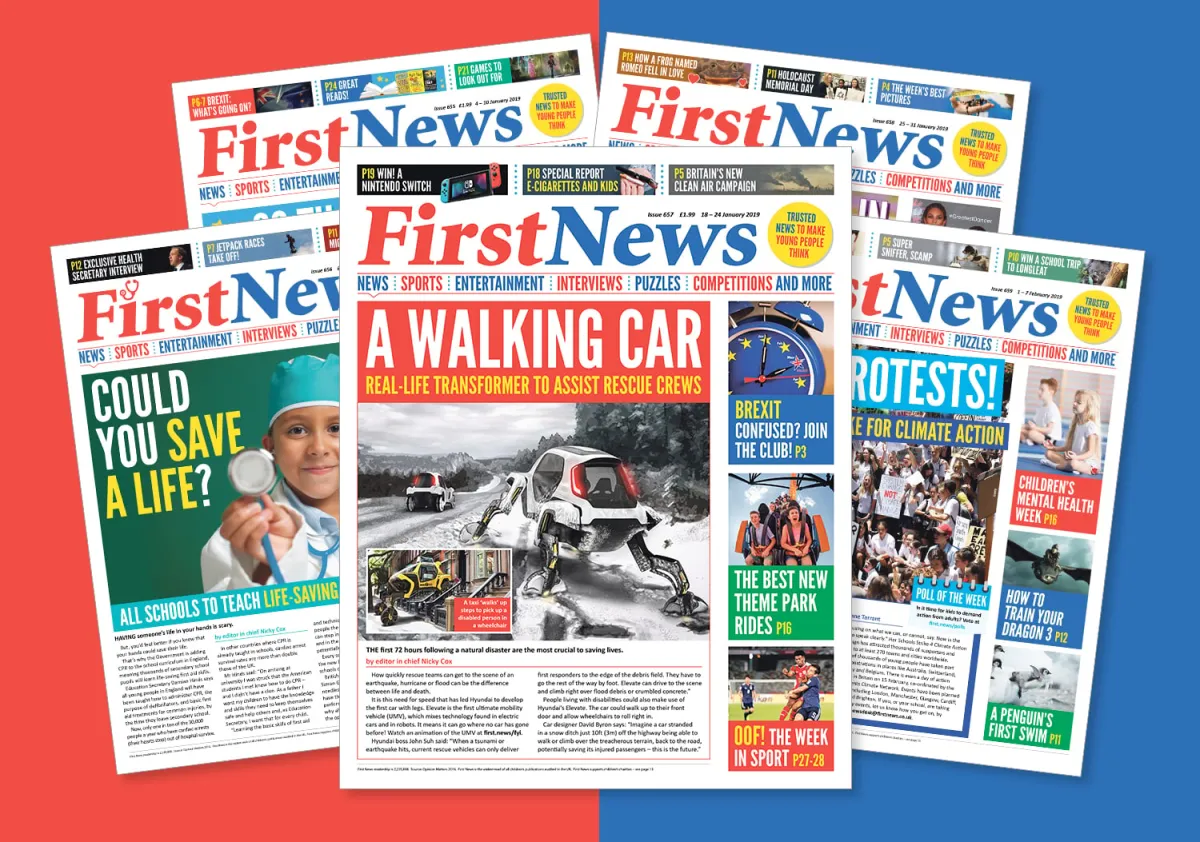 Photo: First News, via subscribe.firstnews.co.uk
This makes them ideal objects of critical analysis in the upper KS2 classroom.
What Critical Media Reading Actually Means
Before outlining a classroom framework, it is worth being precise about what critical media reading involves, because the term is sometimes used loosely in ways that reduce it to scepticism or cynicism — an assumption that news is inherently untrustworthy and that the appropriate response is dismissal.
This is not the goal. Critical reading, in the sense intended here, means engaging with a text as a constructed artefact — recognising that every journalistic choice, from the selection of a story to the choice of a specific adjective, reflects a set of decisions made by a human being with a particular perspective, working within a particular institutional context. This recognition does not invalidate the content; it contextualises it. A critically literate reader is not a suspicious reader but an informed one.
For Years 5 and 6 pupils, the development of this capacity connects directly to the KS2 National Curriculum's requirements for reading, which include the ability to 'distinguish between statements of fact and opinion' and to 'identify how language, structure and presentation contribute to meaning'. News media provides an exceptionally rich context in which to develop both.
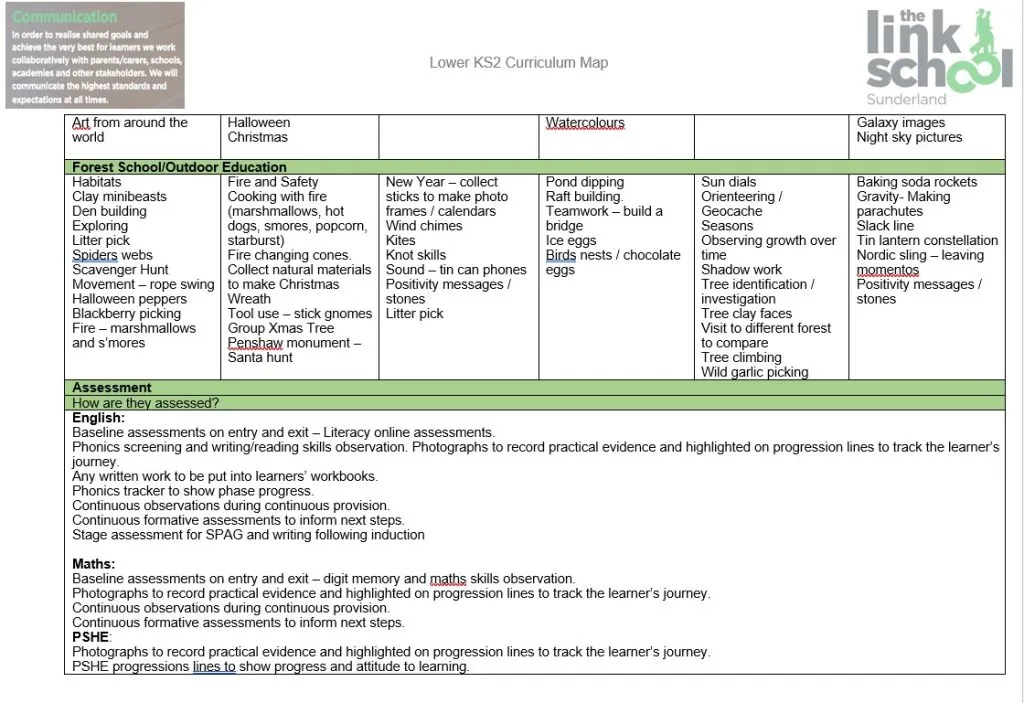 Photo: KS2 National Curriculum, via www.linkschool.org.uk
A Four-Stage Classroom Framework
Stage One: Headline as Hypothesis
Begin every news media lesson with the headline alone — presented without the accompanying article, image, or standfirst. Ask pupils to generate predictions: What might this story be about? What assumptions does the headline make? What does it emphasise, and what might it be leaving out?
This activity establishes a crucial principle from the outset: headlines are not neutral summaries but argumentative choices. A story about a local school receiving additional funding could be headlined 'Council Invests in Children's Future' or 'Taxpayers Fund School Overhaul' — two headlines that describe the same event but frame it in strikingly different ways. Pupils who have practised reading headlines as hypotheses are better equipped to notice this kind of framing in the wild.
With First News articles, this activity is particularly productive because the editorial team writes headlines with considerable craft. Pupils often find that their predictions diverge interestingly from the actual story, which in itself generates valuable discussion about the rhetorical purposes headlines serve.
Stage Two: Language Under the Microscope
Once pupils have read the full article, direct attention to specific language choices. Three categories of analysis are particularly productive at KS2 level.
Loaded language refers to words that carry evaluative connotations beyond their literal meaning. Ask pupils to identify adjectives, adverbs, and verbs that seem to position the reader towards a particular interpretation, and to consider what alternative word choices might have been made. This need not be presented as a search for bias — it is simply an investigation into how word choice shapes reader response.
Quotation selection is a frequently overlooked but analytically rich area. Journalists choose which voices to include and which statements to quote directly. Pupils can examine who is quoted in a given article, whose perspective is absent, and what effect the inclusion of a particular quotation has on the overall impression created by the piece.
Factual claims versus interpretive statements can be distinguished through a simple coding activity: pupils mark each sentence in an article as primarily factual (verifiable through evidence) or primarily interpretive (reflecting a perspective or judgement). Many sentences will contain elements of both, which generates productive discussion about the relationship between fact and framing.
Stage Three: Comparing Coverage
The most powerful critical reading activity available to KS2 teachers is the comparison of two accounts of the same event. First News and Newsround frequently cover the same major stories, often with distinct emphases and framings. Presenting both accounts of the same news event and asking pupils to identify similarities and differences — in story selection, language choices, and structural emphasis — makes visible the constructed nature of all journalism in a way that single-text analysis cannot.
This activity also provides a natural bridge to writing. Pupils who have compared two accounts of the same event are well placed to write their own news report on the same topic, making deliberate choices about framing and language — and reflecting on those choices in a brief authorial commentary.
Stage Four: Contextualising the Source
The final stage of the framework introduces the concept of editorial context — the idea that news organisations have institutional identities, audiences, and purposes that shape their coverage. This does not require pupils to investigate media ownership structures (though older, more able pupils might find this interesting). It simply asks them to consider: Who made this? Who is it for? What is it trying to do?
For First News, these questions yield straightforward and productive answers: it is produced for children, it aims to make news accessible and engaging for a young audience, and it operates within a set of editorial values that prioritise clarity and age-appropriateness. Understanding this context helps pupils read the publication more intelligently, not less.
Addressing Teacher Concerns
Many primary teachers feel understandable uncertainty about bringing current news into the classroom, particularly when stories involve conflict, environmental crisis, or social injustice. These concerns are legitimate and should not be dismissed.
Several strategies can help. First, the framework above is deliberately focused on how news is made rather than the emotional content of specific stories — which means that even a challenging topic can be approached analytically rather than affectively. Second, teachers should feel entirely empowered to select articles for classroom use rather than allowing pupils to choose their own, at least initially. Third, establishing a classroom norm that treats difficult topics as problems to understand rather than causes for alarm helps pupils develop the emotional regulation that critical engagement requires.
It is also worth noting that children are already encountering news media outside school — through family conversations, social media, and YouTube. The question is not whether they will engage with it, but whether they will do so with or without the analytical tools to make sense of what they find.
Critical Literacy as a Long-Term Investment
The skills developed through news media analysis — the capacity to identify perspective, to notice the effects of language choices, to distinguish evidence from interpretation — are not specific to journalism. They are transferable to every text type pupils will encounter throughout their education and beyond. In this sense, the time invested in critical media reading in Years 5 and 6 is not a diversion from the literacy curriculum but a deepening of it.
The news, read carefully and with good questions, is one of the most generative texts a KS2 classroom can contain.