Closing the Chapter: Understanding and Addressing the Collapse in Boys' Reading Engagement Across Upper KS2
A Gap That Opens Quietly
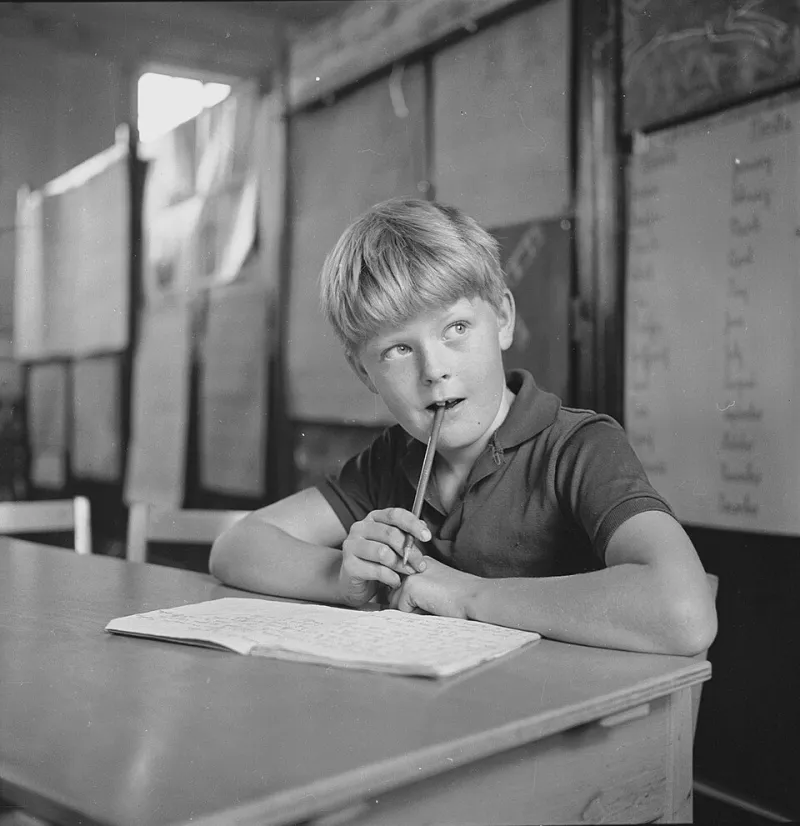
It rarely happens overnight. In Year 3, most classes contain a reasonable spread of enthusiastic readers regardless of gender. By Year 6, however, many KS2 teachers can point to a familiar pattern: a cluster of girls who select books independently, discuss them with animation, and identify themselves readily as readers, alongside a group of boys for whom reading has become something that happens to them rather than something they choose.
This is not anecdote. The National Literacy Trust's annual surveys consistently report that boys in upper primary school are less likely than girls to read daily, less likely to say they enjoy reading, and less likely to own books. The gap is not trivial. In their 2023 report, the Trust found that girls were significantly more likely than boys to describe reading as 'cool' — a small word, but one that carries considerable weight in the social economy of a Year 5 classroom.
Understanding why this happens — and what can genuinely be done about it — requires teachers to look beyond the classroom and into the wider cultural landscape that shapes how boys understand reading as an activity.
Why Engagement Falls: The Social and Cultural Dimensions
Children do not arrive at school as blank slates. By the time they reach Year 4 or 5, many boys have absorbed, from peers, family, media, and wider cultural signals, a set of associations between reading and a particular kind of identity: quiet, solitary, studious, feminine. These associations are rarely articulated explicitly, but they operate powerfully nonetheless.
In a culture where masculinity is still frequently performed through physical activity, competitiveness, and social dominance, sitting alone with a novel can feel like a form of social risk. A boy who is seen to be deeply engrossed in a book may face gentle mockery from peers. More insidiously, many boys have simply never encountered an adult male — father, uncle, older brother, teacher — who reads for pleasure and talks about it openly. Without visible male reading role models, the idea that reading is something men do remains abstract.
This cultural dimension matters because no amount of classroom strategy will fully compensate for an environment that frames reading as an unmasculine activity. Teachers cannot control everything, but they can be deliberate about the messages their classrooms send.
The Problem with 'Boy-Friendly' as a Category
The instinctive response to disengaged male readers is often to reach for a particular genre: football stories, adventure fiction, books about vehicles or battles. There is nothing inherently wrong with this — reading motivation research consistently shows that interest is a powerful driver of engagement, and meeting readers where their interests lie is sound pedagogy.
However, the 'boy-friendly books' approach can become reductive when it hardens into a fixed assumption that all boys want the same thing, and that the goal is simply to funnel them towards a narrow band of approved genres. Boys who are drawn to poetry, mythology, historical fiction, or literary humour deserve as much support as those who love sports narratives. The aim is not to provide a segregated reading experience, but to expand the range of texts that are visible, celebrated, and discussed — and to ensure that boys see their own interests reflected somewhere in that range.
Graphic novels merit particular mention here. Despite their demonstrable literary sophistication, graphic novels are still treated with ambivalence in some KS2 classrooms — tolerated rather than celebrated. Yet the research evidence for their value is strong. Work by Stephen Krashen and others suggests that comic-format reading builds vocabulary, comprehension, and reading stamina in ways that transfer to other text types. Authors such as Raina Telgemeier, Jeff Kinney, and the creators of the Big Nate and Dog Man series have introduced millions of reluctant readers to the pleasure of sustained narrative engagement. These books deserve shelf space and classroom discussion, not quiet relegation to the 'easy option' corner.
Building Authentic Reading Communities
Perhaps the most powerful thing a KS2 teacher can do for disengaged male readers is to change the social meaning of reading within the classroom. This is less about specific texts and more about culture — the daily, accumulated signals that tell pupils whether reading is valued, interesting, and socially acceptable.
Several practical approaches can shift that culture meaningfully:
Male teacher read-alouds with visible enthusiasm. When a male teacher reads aloud from a text he genuinely loves — and talks about why he loves it, what he finds funny, what surprised him, what he thinks about the characters — he performs a version of masculinity that includes reading. This is not performance in an artificial sense; it is authentic modelling. Where male teachers are not available, inviting male teaching assistants, parents, governors, or local community figures to share a favourite book or passage can serve a similar function.
Choice and autonomy within structure. Boys who are given genuine agency over what they read — within a thoughtfully curated range — tend to engage more deeply than those who are assigned texts without consultation. Structured independent reading programmes that allow pupils to select from a broad but carefully chosen library, combined with regular low-stakes conversation about what they are reading, build the intrinsic motivation that sustains long-term engagement.
Peer discussion that feels purposeful. Many boys find traditional book review tasks alienating — they feel more like assessments than conversations. Discussion formats that feel more active and competitive — structured debate about a character's decision, prediction challenges, 'would you rather' dilemmas rooted in a shared text — can make reading talk feel less like a school task and more like a genuine exchange of views.
Celebrating non-linear reading. Boys who dip into reference books, encyclopaedias, sports almanacs, or online articles about their interests are reading. Acknowledging and valuing these modes of reading — rather than treating the novel as the only legitimate form — sends an inclusive message about what counts as a reader's life.
The Identity Question
At the heart of the gender reading gap is an identity question: does this child see themselves as someone who reads? Research by Marilyn Jager Adams and others suggests that reading identity — the sense of oneself as a reader — is a significant predictor of long-term engagement, often more powerful than measured reading ability.
For many boys in upper KS2, the work teachers need to do is less about decoding or comprehension and more about identity reconstruction. A boy who has decided, at age nine or ten, that reading is not for him will resist even the most carefully chosen texts. Rebuilding that identity requires patience, consistency, and — above all — genuine relationship. Knowing what a child cares about, finding the book that speaks to that care, and then sitting with them in the experience of it: these are the moments that shift self-perception.
There are no shortcuts. But the evidence is clear that teachers who invest in this work — who take boys' reading identities seriously as a pedagogical priority — do move the dial. Closing the chapter on disengagement begins with opening a different conversation about who readers are, and who they can become.