Say It Before You Write It: Designing an Oracy-First Approach to Pre-Writing That Lifts Composition Quality Across Years 3–6
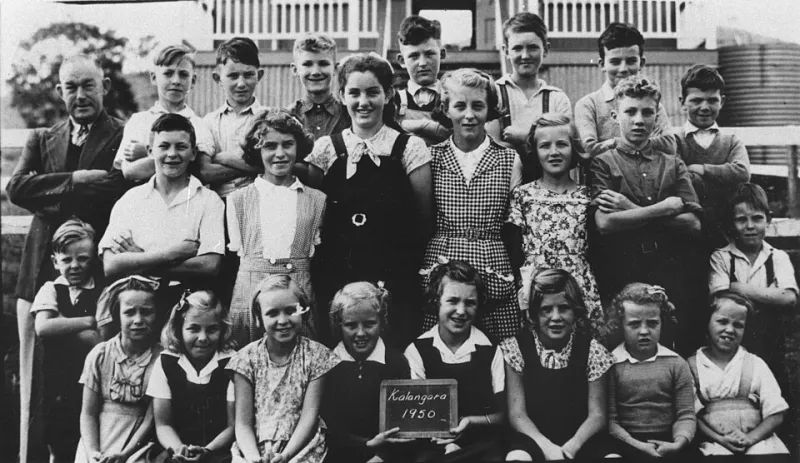
Photo: Unknown authorUnknown author, Public domain, via Wikimedia Commons
The Gap Between Saying and Writing
Ask a Year 4 pupil to tell you about the most frightening moment of their life, and many will speak with fluency, detail, and genuine narrative flair. Ask them to write about it, and the result is often a thin, stilted account that bears little resemblance to the story they just told. The ideas are there. The language is there. Something is being lost in the translation from speech to text—and understanding what that something is holds the key to transforming composition quality across KS2.
The problem, in most cases, is not a lack of ideas but a lack of oral rehearsal. Writing is a cognitively demanding act that requires pupils to manage handwriting, spelling, grammar, punctuation, and meaning simultaneously. When pupils move directly from a brief planning prompt to a blank page, they are attempting to construct and transcribe ideas at the same time—a double burden that frequently results in underdeveloped, faltering prose. The solution is not to simplify the writing task, but to do more of the thinking work before writing begins.
This is the principle behind pre-writing oracy: a structured approach that uses purposeful talk to help pupils clarify, organise, and rehearse their ideas aloud before they write, so that the act of writing becomes, in large part, an act of transcription rather than simultaneous invention.
Why Talk Is Not a Preliminary to Thinking—It Is Thinking
There is a tendency in some classrooms to treat talk as a precursor to the 'real' work of writing: a warm-up activity that, once completed, gives way to the serious business of putting words on the page. This framing underestimates what talk actually does. For most people—children and adults alike—articulating an idea aloud is not a rehearsal for thinking; it is the thinking itself.
When a pupil explains their argument to a partner, they discover where it holds and where it breaks down. When they narrate a sequence of events, they hear which details are missing. When they read a sentence aloud that they have just composed in their head, they notice immediately whether it sounds right—a form of self-editing that is far more instinctive than the visual scanning of a written draft. Talk is not the shadow of writing; in many respects, it is its foundation.
A pre-writing oracy protocol formalises this understanding and makes it a consistent, structured part of the writing process rather than an occasional, informal preamble.
A Framework for Pre-Writing Oracy
The following protocol is designed to be adaptable across Years 3 to 6 and across a range of text types—narrative, persuasion, explanation, and non-chronological report. It comprises three stages, each serving a distinct function in the preparation for writing.
Stage One: Exploratory Talk
Before any structure is imposed, pupils need time to explore their ideas freely. This might take the form of a brief paired discussion—two to three minutes—in which both pupils respond to an open prompt related to the writing task. The prompt should be genuinely open: not 'What are you going to write about?' but 'What do you actually think about this?' or 'Tell me everything you know about this topic.'
The teacher's role during this stage is to circulate, listen, and identify pupils who are struggling to generate ideas or who are defaulting to vague generalities. Targeted questioning at this point—What do you mean by that? Can you give me an example? What would someone who disagreed with you say?—can unlock thinking that would otherwise remain inaccessible.
Stage Two: Structuring Through Oral Rehearsal
Once ideas have been surfaced, pupils need support in organising them. This is where talk moves from exploratory to purposeful. Ask pupils to tell their partner their 'writing plan' in spoken form: Tell your partner how your story is going to begin, what the problem will be, and how it will end—or, for non-fiction: Tell your partner your three main points and why each one matters.
The partner's role is not passive. Introduce a set of structured listening prompts that partners use to give feedback: I wasn't sure what you meant when you said…, I thought the strongest part was…, You didn't say anything about… These prompts teach active listening as a literacy skill in its own right, and they give the speaker genuinely useful information before they begin to write.
For younger or less confident writers in Years 3 and 4, this stage can be supported by visual scaffolds—a simple story map or a three-box planning frame—which the pupil talks through rather than writes on.
Stage Three: Sentence-Level Rehearsal
The final stage before writing begins is the most specific: ask pupils to compose and speak aloud two or three sentences that they intend to write. This is not about memorising exact phrasing but about testing whether ideas that feel coherent in the mind also sound coherent when articulated. Pupils frequently revise their intended sentences during this stage—simplifying an overcomplicated structure, finding a better word, or realising that their opening sentence is not, in fact, where they want to begin.
This stage is particularly valuable for pupils who struggle with sentence construction, as it allows difficulties to be identified and addressed before the added pressure of transcription is introduced.
Embedding the Protocol Without Losing Momentum
A common concern among teachers is that a structured pre-writing protocol will consume too much lesson time. In practice, once pupils are familiar with the three stages, the entire process can be completed in ten to fifteen minutes—and the quality of the drafts that follow typically reduces the time needed for revision and redrafting, producing an overall efficiency gain rather than a loss.
The key is to establish the protocol as a consistent classroom routine rather than an occasional intervention. When pupils know that talk always precedes writing, they begin to use the pre-writing stages more purposefully over time. The exploratory conversation becomes richer, the oral rehearsal becomes more precise, and the sentence-level preparation becomes a genuine compositional tool rather than a procedural requirement.
The Confidence Dividend
Beyond the measurable improvements in draft quality, pre-writing oracy has a less quantifiable but equally significant effect: it reduces the anxiety that many KS2 pupils experience when faced with a blank page. When a pupil sits down to write having already talked through their ideas, heard them reflected back, and rehearsed their opening sentences, the page is no longer blank in any meaningful sense. The thinking has been done. The writing is, in large part, already there—waiting to be set down.
For reluctant writers in particular, this shift in experience can be transformative. The pupil who has always experienced writing as a process of extracting ideas from an empty mind discovers, through talk, that the ideas were never absent. They simply needed a voice before they could find a page.