The Quiet Ones: Identifying and Re-Engaging KS2 Pupils Who Are Coasting Through Literacy
The Child Who Causes No Problems
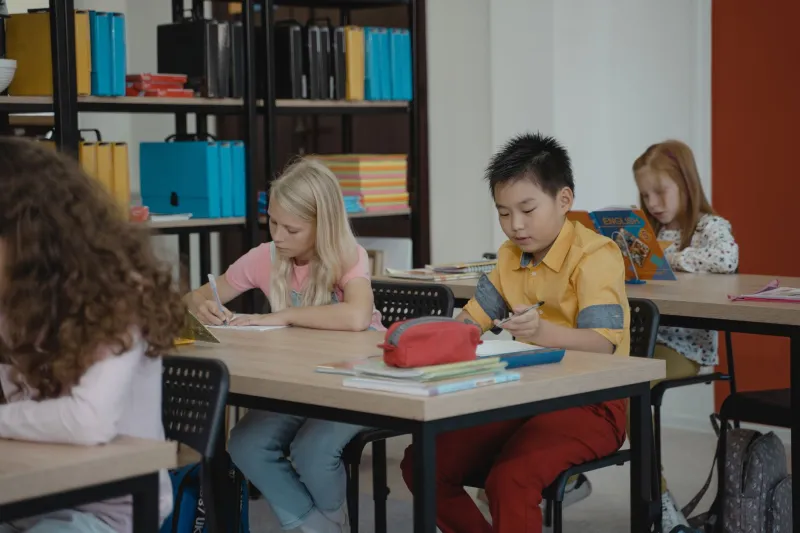
In the daily reality of a busy KS2 classroom, the pupil who sits quietly, completes tasks without complaint, and never disrupts a lesson can feel like a gift. They are not flagged by the SENCO. They are not on any intervention programme. They appear, by every surface measure, to be fine.
But 'fine' is not the same as flourishing. And for a meaningful proportion of KS2 pupils, the appearance of quiet compliance conceals something more troubling: a literacy experience defined by minimal effort, shallow engagement, and a careful calibration of output designed to avoid both failure and scrutiny.
These are the invisibly disengaged — and they represent one of the most underaddressed challenges in primary English teaching.
Why Traditional Whole-Class Literacy Activities Miss Them
Whole-class reading sessions, shared writing activities, and discussion-based lessons are designed with participation in mind. In practice, they often create conditions that allow the quietly disengaged pupil to disappear.
Consider the reading lesson structured around a class novel. The teacher reads aloud, poses questions, and takes responses. A handful of enthusiastic pupils dominate the discussion. The quiet pupil listens, nods occasionally, and records a neat answer in their book. The answer is adequate — perhaps even accurate. But it requires no genuine intellectual effort. It has been assembled from the responses already offered by classmates, processed through the filter of what the teacher appears to want, and produced with the primary goal of satisfying the task rather than engaging with the text.
This is not a failure of will on the pupil's part. It is a rational response to a system that, inadvertently, rewards surface compliance.
Recognising the Signs
Identifying the invisibly disengaged requires teachers to look beyond attainment data and task completion. Some indicators worth attending to:
- Consistently adequate but never surprising work. The quietly coasting pupil rarely produces writing that feels genuinely invested. Their stories follow predictable paths; their comprehension responses paraphrase rather than interpret.
- Reluctance to take interpretive risks. In discussion, they wait for consensus before contributing. In writing, they choose the safer option whenever there is one.
- Flat engagement with book choice. When given free choice of reading material, they select the same genre repeatedly, or choose books based on peer visibility rather than personal interest.
- Absence of reading identity. They cannot describe themselves as a reader with any specificity. Ask what kind of books they enjoy and the answer is vague: I don't mind. Anything, really.
- Disproportionate reliance on external structure. Remove the scaffold — the word bank, the writing frame, the guided session — and the quality of their work drops more sharply than might be expected for their apparent ability.
None of these indicators alone is conclusive. Together, they sketch a profile worth investigating.
Why These Pupils Are Often Missed
There are structural reasons why the invisibly disengaged slip through the net. Assessment systems in KS2 are calibrated to identify pupils who are performing below age-related expectations. A pupil performing at or near the expected standard, but well below their actual potential, generates no data alert.
Teacher workload is also a factor. When thirty pupils require attention and a subset have identified needs, the child who is coping — however minimally — will naturally receive less focused scrutiny. This is not a criticism of teachers; it is an honest account of the conditions in which they work.
Finally, these pupils are often socially skilled enough to perform engagement convincingly. They make eye contact during the read-aloud. They pick up a book when independent reading begins. The performance of literacy is not the same as the experience of it.
Evidence-Based Approaches to Re-Engagement
Structured One-to-One Reading Conversations
One of the most revealing — and re-engaging — interventions available to a class teacher costs nothing but time: a brief, genuine conversation about reading. Not a comprehension quiz. Not a reading record check. A real conversation: What are you reading at the moment? What made you choose it? Is there a moment that surprised you?
These conversations serve two purposes. They gather diagnostic information about the pupil's actual engagement with texts. And they signal to the pupil that their reading life matters as an individual experience, not merely as a measurable outcome. For many quietly disengaged pupils, this is a genuinely novel experience.
Raising the Cognitive Demand Without Raising the Stakes
The invisibly disengaged pupil has often learned that low effort is sufficient. One way to disrupt this is to raise the intellectual demand of literacy tasks whilst keeping the emotional stakes low. Open-ended, genuinely debatable questions — Do you think the author made the right choice ending the chapter here? Why might someone disagree with you? — require real thinking rather than retrieval. They cannot be answered by assembling the room's consensus.
Crucially, these questions should be posed in formats that require individual response before group discussion: a brief written reflection, a talk-partner exchange, a private reading journal entry. This removes the option of borrowing someone else's thinking.
Building a Reading Identity Through Deliberate Exposure
Pupils who describe themselves as readers with no particular preferences have often simply not encountered the text that will claim them. A teacher who knows a pupil is coasting can act as a deliberate matchmaker — placing a specific, carefully chosen book in their hands with a personal recommendation: I thought of you when I read this. Tell me what you think.
This is not a generic strategy. It requires the teacher to know enough about the pupil — their interests, their humour, their preoccupations — to make a genuinely tailored suggestion. The act of being seen in this way is itself a re-engagement intervention.
Writing Tasks With Genuine Audience and Purpose
The quietly coasting writer produces work for the teacher. Shift the audience — to a younger class, to a local newspaper, to an author whose work the class has studied — and the calculus changes. Writing that will be genuinely read by a genuine reader requires genuine investment. Many invisibly disengaged pupils, given a real purpose and a real audience, discover that they have considerably more to say than their exercise books have previously suggested.
A Systemic Commitment
Addressing invisible disengagement is not a matter of a single intervention. It requires a classroom culture in which literacy is experienced as personally meaningful rather than institutionally required — where reading is not a performance of compliance but an act of genuine encounter, and where writing is understood as a way of making sense of the world rather than satisfying a mark scheme.
The quiet pupil at the back of the room is not struggling. But they are not thriving either. And in a subject as central to educational life as English, adequate is a ceiling that no child should be left to bump against unnoticed.