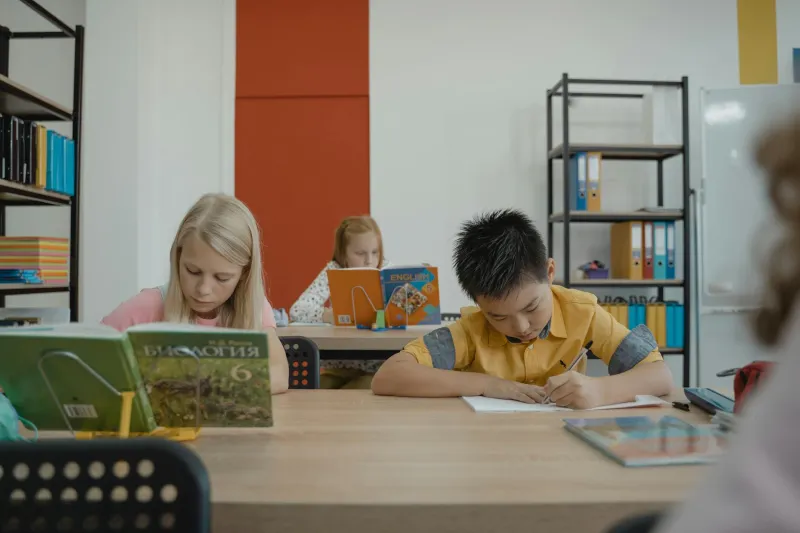
Every KS2 teacher recognises them: pupils who struggle to transfer ideas onto paper despite demonstrating rich storytelling abilities during playground conversations or classroom discussions. These learners often face the writing process with visible anxiety, their creativity seemingly evaporating the moment pencil meets paper. What if our well-intentioned planning frameworks—story mountains, writing scaffolds, linear outlines—are inadvertently creating barriers for some of our most imaginative thinkers?
Challenging the Universal Planning Myth
The current landscape of KS2 writing instruction heavily emphasises structured planning approaches. Story mountains dominate classroom walls, writing frames provide step-by-step guidance, and bullet-pointed outlines promise clarity and organisation. These tools undoubtedly support many learners, particularly those who thrive with clear sequential structures.
However, mounting classroom evidence suggests that this one-size-fits-all approach may be failing a significant portion of our pupils. Children with strong oral storytelling skills, those with neurodiverse learning profiles, or pupils whose thinking patterns don't align with linear progression often find themselves trapped within frameworks that constrain rather than liberate their creativity.
The KS2 writing programme of study requires pupils to "plan their writing by discussing writing similar to that which they are planning to write" and "discussing and recording ideas." Notably, these objectives emphasise discussion and idea generation rather than prescriptive structural approaches.
The Oral Rehearsal Revolution
Understanding Verbal Processors
Some pupils think most clearly when they speak. Their ideas develop through articulation, building momentum through verbal exploration rather than silent contemplation. For these learners, traditional planning methods—which require immediate written organisation—interrupt their natural creative flow.
Consider implementing story circles where pupils share developing narratives with partners before any writing occurs. This approach allows verbal processors to refine their ideas through speech, building confidence and clarity before transitioning to written form.
Practical Implementation
Story Walking: Pupils physically move around the classroom whilst narrating their stories aloud. Different areas represent different story elements—character corner, setting station, problem point, resolution room. This kinaesthetic approach supports learners who need movement to organise their thinking.
Digital Voice Notes: Utilising tablets or recording devices, pupils can capture their story ideas through voice recordings, then listen back to identify key elements for development. This method particularly benefits pupils who struggle with the physical act of writing but have rich imaginative capabilities.
Collaborative Story Building: Pairs or small groups develop stories together through structured conversation protocols. One pupil begins with a character, another adds a setting, a third introduces a problem. This scaffolded oral development reduces individual pressure whilst building narrative understanding.
Visual Mapping: Beyond Linear Structures
Mind Maps and Story Webs
Traditional story mountains assume narrative development follows a predictable arc. However, many creative writers—including published authors—describe their planning process as more web-like, with connections forming organically between different story elements.
Character-Centred Webs: Rather than plotting events chronologically, pupils begin with their protagonist at the centre, radiating outwards to explore relationships, motivations, obstacles, and goals. This approach often reveals story possibilities that linear planning misses.
Emotional Journey Maps: Pupils track their character's emotional progression through visual representations—colours, symbols, or simple drawings. This technique particularly supports learners who understand stories through feeling rather than plot mechanics.
Sketch-Note Storytelling
Combining visual and textual elements, sketch-noting allows pupils to capture story ideas through drawings, symbols, and brief text annotations. This approach reduces the pressure of formal writing whilst encouraging creative exploration.
Pupils might create visual storyboards with minimal text, focusing on key moments rather than detailed descriptions. These sketches then serve as prompts for oral storytelling or guided writing sessions.
Collaborative Approaches: Harnessing Collective Creativity
The Power of Partnership
Some reluctant writers flourish when writing becomes a collaborative rather than solitary activity. Working with peers can reduce anxiety, generate ideas through discussion, and provide natural audience awareness.
Story Partnerships: Pairs work together to develop narratives, with one pupil focusing on dialogue whilst another handles description, or alternating paragraphs to build shared stories. This approach allows pupils to contribute their strengths whilst learning from their partner's techniques.
Expert Groups: Pupils specialise in different story elements—character development experts, setting specialists, dialogue masters. Stories develop through consultation between groups, creating authentic purposes for discussion and revision.
Digital Collaboration Tools
Shared documents allow pupils to contribute to stories asynchronously, building narratives through multiple sessions. Comments and suggestions features enable peer feedback without the pressure of immediate verbal critique.
Addressing Neurodiverse Learning Needs
Supporting Different Processing Styles
Pupils with ADHD, autism, or dyslexia often have unique relationships with planning and organisation. Traditional frameworks may feel overwhelming or restrictive, whilst alternative approaches can unlock remarkable creativity.
Flexible Timeframes: Some pupils need extended thinking time, whilst others work best with rapid idea generation. Offering choice in planning duration supports different processing speeds.
Multi-Sensory Planning: Incorporating tactile elements—story stones, character puppets, setting photographs—engages different learning modalities whilst reducing reliance on written organisation.
Interest-Led Planning: Beginning with pupils' passions and obsessions often generates more authentic engagement than prescribed topics. A pupil fascinated by trains might develop compelling narratives around railway adventures, bringing genuine enthusiasm to the writing process.
Implementation Strategies for KS2 Teachers
Gradual Introduction
Transitioning from structured frameworks to flexible approaches requires careful scaffolding. Begin by offering choice within existing systems—pupils might choose between traditional story mountains and visual story webs, or select from oral rehearsal or written planning options.
Maintaining Standards
Alternative planning approaches don't compromise writing quality; they enhance it by matching methods to individual learning strengths. Assessment focuses on final outcomes rather than planning processes, recognising that different paths can lead to equally successful destinations.
Professional Development Considerations
Implementing diverse planning approaches requires teachers to expand their pedagogical toolkit. This might involve observing colleagues who use alternative methods, attending training on neurodiverse learning needs, or experimenting with new approaches in low-stakes situations.
Evidence from Practice
Classroom observations consistently demonstrate that pupils previously labelled as "reluctant writers" often transform when offered planning methods that align with their learning strengths. A Year 4 pupil who struggled with story mountains might flourish with oral rehearsal, whilst a Year 6 learner overwhelmed by written planning might excel with collaborative story development.
These transformations suggest that many pupils aren't actually reluctant writers—they're learners whose creativity has been constrained by mismatched planning approaches.
Conclusion
The most effective KS2 writing instruction recognises that creative processes are deeply personal. Whilst structured planning frameworks serve many pupils well, alternative approaches—oral rehearsal, visual mapping, collaborative development—can unlock the potential of learners who think differently.
By expanding our planning toolkit beyond traditional frameworks, we create inclusive classrooms where every pupil can access their creative potential. This approach doesn't abandon structure; it recognises that structure can take many forms, and the most effective form varies from learner to learner.
The goal remains constant: developing confident, capable writers who can communicate their ideas effectively. The path to achieving this goal, however, should be as diverse as the pupils we serve.