The Silent Struggle in KS2 Writing
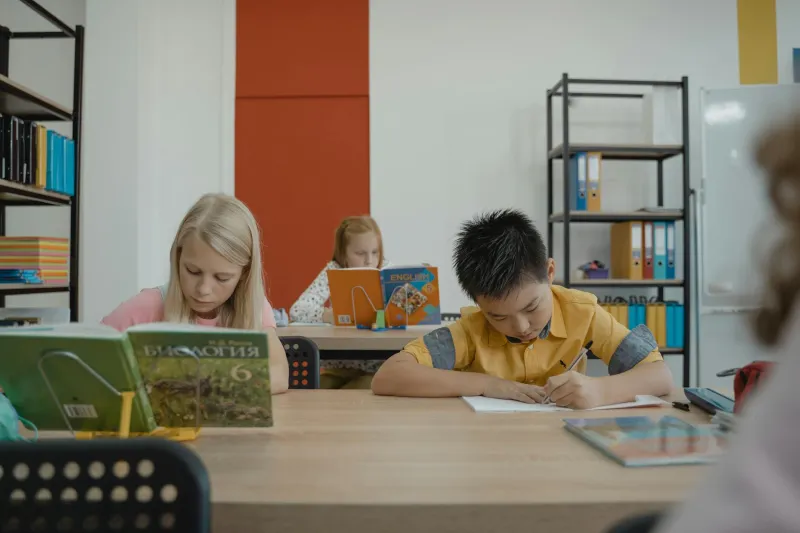
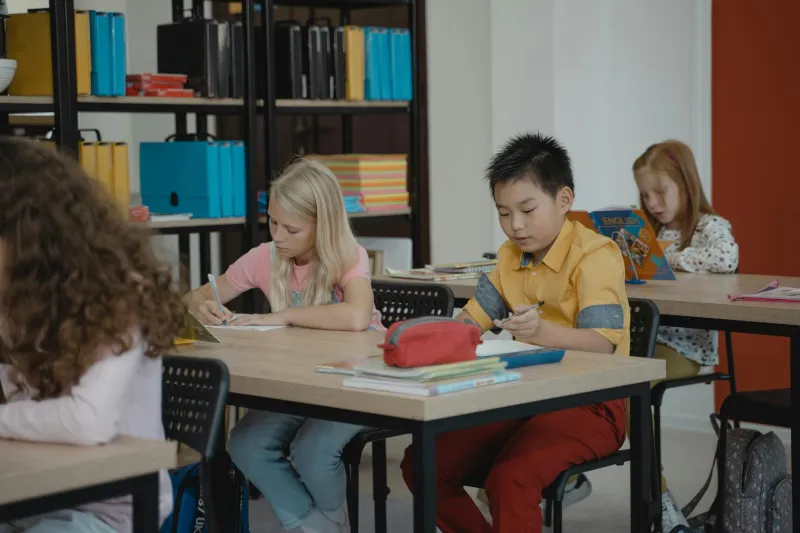
Across primary classrooms throughout England, a familiar scene unfolds daily: pupils staring at blank pages, pencils hovering uncertainly above paper, creative thoughts trapped behind the mechanics of handwriting. For many Year 3-6 learners, the physical and cognitive demands of transcription create an insurmountable barrier between imagination and expression.
Recent research from the Institute of Education reveals that nearly 40% of KS2 pupils experience significant writing fatigue within the first ten minutes of extended composition tasks. This statistic becomes particularly concerning when we consider that National Curriculum expectations require increasingly sophisticated written responses across all subjects.
The traditional approach of simultaneous composition and transcription places enormous cognitive load on developing minds. Pupils must simultaneously generate ideas, structure narratives, select vocabulary, construct sentences, recall spelling patterns, apply punctuation rules, and maintain legible handwriting. For many children, particularly those with SEND needs, this multitasking proves overwhelming.
Breaking the Transcription Barrier
Digital dictation technology offers a revolutionary solution to this age-old educational challenge. Voice-to-text tools, now readily available through standard classroom tablets and computers, enable pupils to articulate complex ideas without the physical constraints of handwriting or typing.
Sarah Mitchell, a Year 4 teacher from Manchester, describes the transformation in her classroom: "When Jamie first used voice dictation for his adventure story, I heard vocabulary and sentence structures that had never appeared in his written work. He was finally able to show his true understanding of narrative techniques without being limited by his handwriting speed."
This separation of composition from secretarial skills aligns perfectly with research from Cambridge University's Faculty of Education, which demonstrates that pupils' oral vocabulary consistently exceeds their written vocabulary by several thousand words throughout primary school years.
Practical Implementation Strategies
Successful integration of dictation technology requires thoughtful planning and structured implementation. Teachers report greatest success when introducing voice-to-text tools through guided practice sessions, beginning with familiar topics and gradually progressing to more complex writing tasks.
Establishing Ground Rules
Effective dictation sessions begin with clear protocols. Pupils must learn to speak clearly, pause appropriately for punctuation, and develop awareness of when to edit their transcribed text. Many teachers create visual cues and hand signals to support this transition from speech to text.
Classroom management becomes crucial when multiple pupils use voice dictation simultaneously. Headset microphones, designated quiet spaces, and scheduled rotation systems help maintain productive learning environments whilst accommodating this technology.
Supporting SEND Learners
For pupils with specific educational needs, dictation technology proves particularly transformative. Children experiencing dysgraphia, dyslexia, or fine motor difficulties often demonstrate remarkable improvement in their written outcomes when transcription barriers are removed.
Emma Thompson, SENCO at a Birmingham primary school, explains: "One of our Year 5 pupils with cerebral palsy went from producing single-sentence responses to crafting detailed character descriptions using voice dictation. The technology didn't lower our expectations—it revealed capabilities we hadn't previously accessed."
Maintaining Writing Stamina Development
Critics often express concern that dictation technology might diminish pupils' handwriting skills or reduce their tolerance for traditional writing tasks. However, effective implementation treats voice-to-text as one tool within a comprehensive writing programme rather than a complete replacement for pen-and-paper work.
Successful teachers employ a balanced approach, using dictation technology for initial composition and idea generation whilst maintaining regular handwriting practice and shorter transcription tasks. This dual approach ensures pupils develop both digital fluency and traditional writing stamina.
Building Editorial Skills
Dictation technology actually enhances pupils' editorial capabilities by providing immediate, readable text for revision and improvement. When ideas flow freely through speech, pupils can focus subsequent lessons on refining vocabulary choices, improving sentence structures, and developing their personal writing voice.
Many teachers report that pupils become more willing to attempt ambitious vocabulary and complex sentences when they know revision will be straightforward on screen rather than requiring complete rewriting by hand.
Evidence-Based Benefits
Longitudinal studies from the University of Oxford demonstrate significant improvements in both writing quality and quantity when pupils regularly access dictation technology. Participants showed increased sentence complexity, enhanced vocabulary usage, and greater willingness to attempt challenging writing tasks.
Particularly encouraging results emerge for pupils who previously struggled with writing motivation. When transcription barriers disappear, many children discover genuine enthusiasm for storytelling and creative expression that had been masked by physical writing difficulties.
Looking Forward
As dictation technology becomes increasingly sophisticated and accessible, primary schools must consider how these tools fit within their literacy programmes. The goal remains developing confident, capable writers who can express themselves effectively across multiple formats and contexts.
Successful implementation requires recognising that excellent composition skills—idea generation, narrative structure, character development, persuasive argumentation—remain equally valuable whether expressed through voice, keyboard, or pen. By embracing dictation technology thoughtfully, KS2 teachers can unlock creative potential whilst maintaining rigorous standards for written communication.
The reluctant writer's toolkit now includes powerful digital allies. When used strategically, these tools don't diminish writing instruction—they revolutionise it, ensuring every pupil can participate fully in the joy of creative expression.