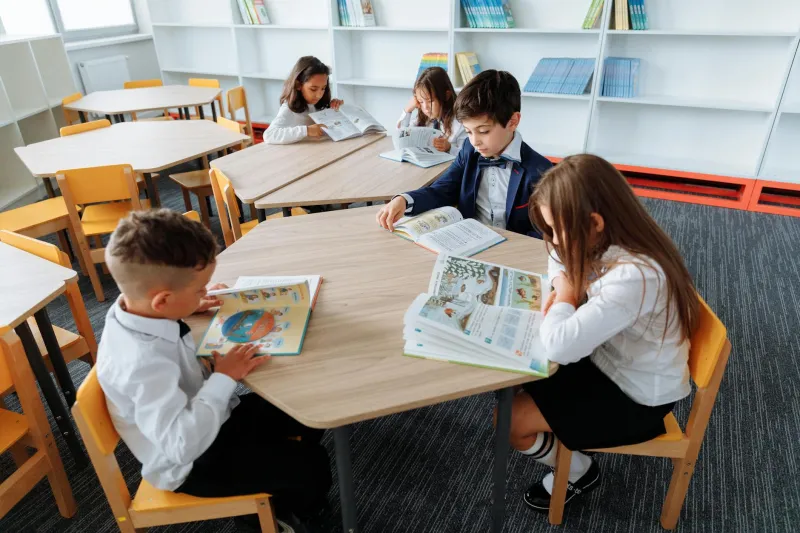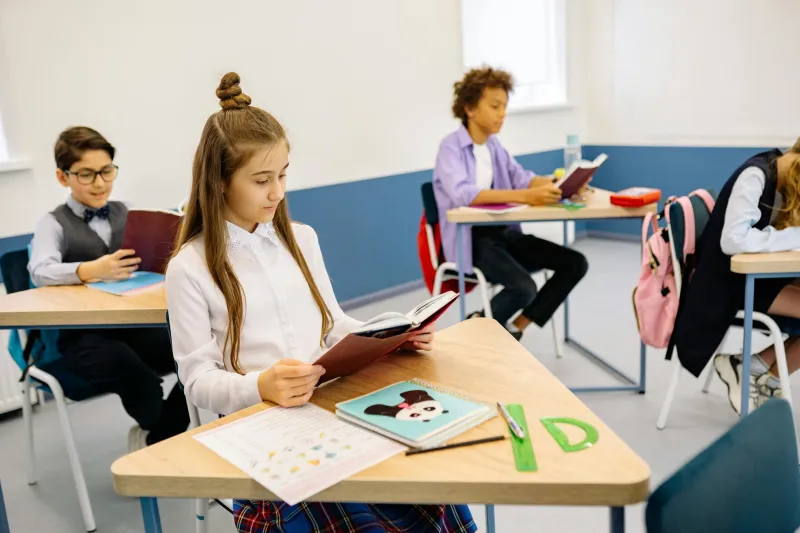
In the hurried pace of modern primary classrooms, where curriculum demands often push teachers towards rapid-fire questioning and immediate responses, a quiet revolution is taking place. Progressive KS2 educators are discovering that slowing down the reading process — not speeding it up — holds the key to unlocking deeper comprehension skills in their pupils.
The Rush to Answer: A Barrier to Understanding
Traditional reading lessons often follow a predictable pattern: text introduction, reading time, followed by a barrage of comprehension questions demanding swift responses. This approach, whilst efficient for covering curriculum content, inadvertently trains children to prioritise speed over depth. The result? Pupils develop surface-level reading habits that serve them poorly when encountering challenging texts in upper primary and beyond.
Research in cognitive psychology reveals that comprehension is not a passive process but an active construction of meaning requiring time, reflection, and conscious effort. When we rush children towards answers, we rob them of the opportunity to develop what educational psychologists term 'metacognitive awareness' — the ability to think about their own thinking.
Building the Architecture of Thought
Effective reading comprehension relies on what might be termed 'cognitive architecture' — the mental frameworks pupils use to process, analyse, and synthesise textual information. Strategic pauses during reading lessons provide the scaffolding necessary to construct this architecture deliberately and systematically.
Consider the difference between a child who immediately blurts out "the character is sad" versus one who pauses and reflects: "I think the character might be feeling conflicted because the author uses words like 'hesitated' and 'glanced back', which suggest uncertainty rather than straightforward sadness." The second response demonstrates not just comprehension but analytical thinking that transfers across all learning contexts.
Practical Strategies for Structured Thinking Time
The Three-Breath Rule
Implement a simple yet powerful technique where children take three deliberate breaths before responding to any comprehension question. This brief pause activates the prefrontal cortex — the brain's executive function centre — allowing for more thoughtful responses. Teachers report remarkable improvements in answer quality when this becomes classroom routine.
Think-Aloud Protocols
Model your own thinking process by verbalising your mental journey through a text. "I'm noticing the author's choice of the word 'crept' here. That makes me think about why the character isn't walking normally. Let me read on to see if I can work out what's happening." This demonstrates that skilled readers constantly question, predict, and revise their understanding.
Annotation Stations
Create designated spaces in texts where pupils must stop and record their thinking using a simple coding system: '?' for confusion, '!' for surprise, '*' for important information, and '=' for connections to other texts or experiences. These pause points transform reading from a passive activity into an active dialogue with the text.
The Power of Productive Confusion
Perhaps most importantly, strategic pauses teach children that confusion is not failure but opportunity. When a Year 4 pupil encounters a challenging metaphor and admits "I don't understand this bit yet," they demonstrate sophisticated self-awareness that many adults lack.
Effective teachers celebrate these moments of acknowledged confusion, using them as springboards for collaborative meaning-making. "That's excellent noticing, James. Who else found that part puzzling? Let's work through it together." This approach builds resilience and positions struggle as a natural part of learning.
Questioning Sequences That Promote Deep Thinking
Replace rapid-fire questioning with carefully sequenced prompts that build understanding progressively:
- Surface level: "What happened in this section?"
- Inferential: "What might the character be thinking here?"
- Analytical: "How does the author help us understand the character's feelings?"
- Evaluative: "Do you think the character made the right choice? Why?"
Each level requires processing time, and teachers who allow genuine thinking space report more sophisticated responses at every level.
Assessment That Values Process Over Speed
Traditional comprehension assessments often prioritise quick, correct answers over thinking processes. Progressive KS2 teachers are experimenting with assessment approaches that value the quality of reasoning alongside accuracy. Recording children's verbal explanations, for instance, often reveals sophisticated understanding that written responses might miss.
Creating a Culture of Thoughtful Response
Transforming classroom culture requires patience and consistency. Begin by explicitly teaching children that thoughtful responses are more valuable than quick ones. Praise pupils who take time to consider their answers, and avoid the temptation to fill every silence with teacher talk.
Establish clear expectations: "In our classroom, we value thinking time. When I ask a question, I expect you to really consider your response before sharing." Model this behaviour consistently, and children quickly adapt to this more reflective approach.
The Long-Term Impact
Pupils who develop strategic thinking habits in KS2 reading lessons carry these skills across their entire academic experience. They become the secondary school students who can analyse poetry with nuance, the university students who can synthesise complex arguments, and the adults who can navigate our increasingly complex world with critical thinking skills.
The investment in thinking time during primary years pays dividends that extend far beyond the classroom walls, creating lifelong learners who approach challenges with confidence, curiosity, and analytical sophistication.
Conclusion
In our rush to cover curriculum content and prepare pupils for assessments, we must not lose sight of our fundamental purpose: developing thinking human beings capable of engaging meaningfully with complex texts and ideas. Strategic pauses in reading lessons represent a simple yet profound shift that honours this deeper educational mission whilst simultaneously improving measurable outcomes.
The thinking classroom is not about slowing down learning — it's about deepening it in ways that serve our pupils throughout their lives.