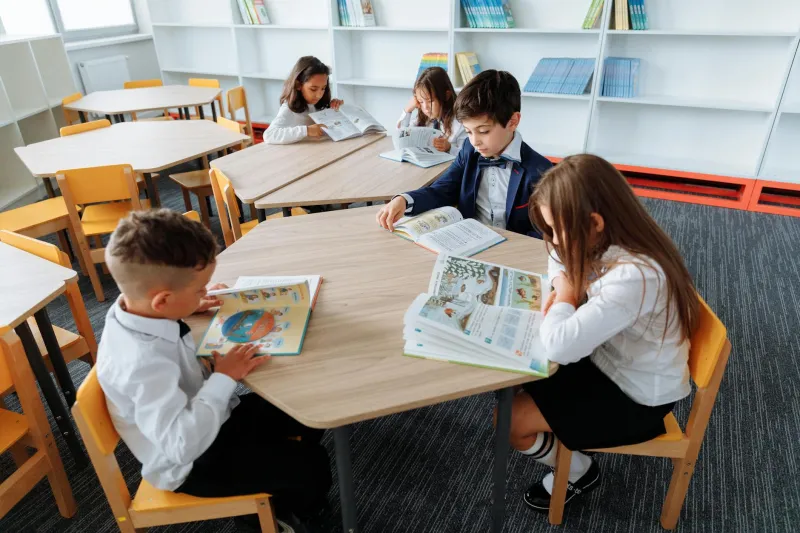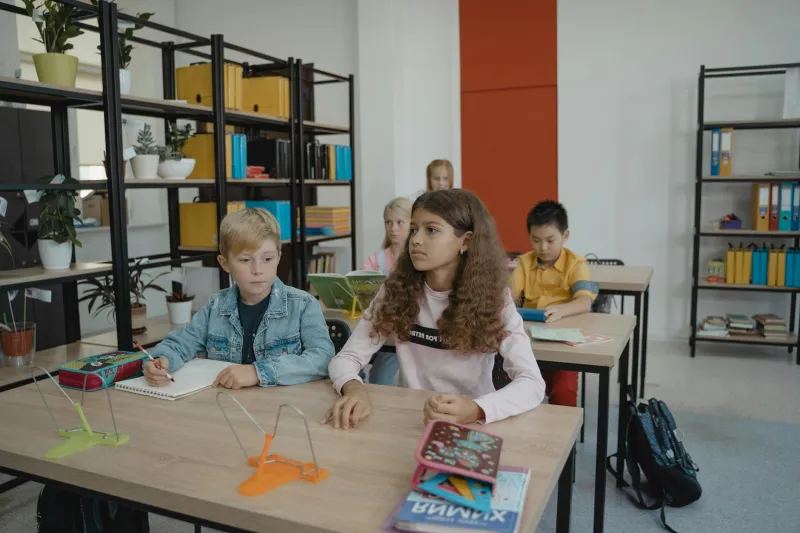
The transition from literal to inferential reading represents one of the most significant cognitive leaps in a child's literacy journey. Whilst Year 3 and 4 pupils typically master the mechanics of extracting stated information, Years 5 and 6 present teachers with a more complex challenge: helping pupils recognise that authors deliberately leave gaps for readers to fill.
This pedagogical shift requires more than wishful thinking or generic questioning. It demands systematic instruction that makes the invisible processes of inference explicit and accessible to all learners.
The Inference Challenge in Upper Primary
Many Year 5 and 6 pupils arrive at inferential questions with a toolkit designed for literal comprehension. They scan for keywords, hunt for direct matches between question and text, then express frustration when answers cannot be located through simple retrieval strategies.
The root of this difficulty lies in the fundamental nature of inference itself. Unlike literal comprehension, which rewards pupils for finding information that authors have explicitly provided, inferential reading requires pupils to combine textual evidence with their own knowledge and experience to construct meaning that exists between the lines.
Consider this passage from Jacqueline Wilson's The Story of Tracy Beaker: "I got ready very carefully. I wanted to look my best. I brushed my hair until it shone and I put on my newest jeans and my favourite T-shirt."
 Photo: Jacqueline Wilson, via cdn2.penguin.com.au
A literal question might ask: "What clothes did Tracy wear?" The answer sits clearly in the text. An inferential question asks: "Why was Tracy taking special care with her appearance?" The answer requires pupils to synthesise textual clues with their understanding of human behaviour and the broader story context.
Building the Inference Framework
Successful inference instruction begins with making the thinking process visible. The most effective approach involves teaching pupils a systematic framework they can apply consistently across different texts and contexts.
The Evidence-Plus-Experience Model
This framework teaches pupils that strong inferences result from combining two elements: textual evidence and personal knowledge. Begin by modelling this process explicitly:
"I notice the author tells us Tracy brushed her hair until it shone and chose her newest clothes. This is my evidence from the text. From my experience, I know people dress carefully when something important is happening or when they want to make a good impression. Combining these two pieces, I can infer that Tracy is preparing for something significant."
This model provides pupils with a concrete structure whilst acknowledging that inference requires both careful reading and thoughtful connection-making.
Progressive Questioning Sequences
Develop pupils' inferential thinking through carefully sequenced questions that build complexity gradually:
Level 1: Character Emotions
- "How is this character feeling?"
- "What tells you this?"
- "What do you know from your own experience about feeling this way?"
Level 2: Cause and Effect
- "Why did this happen?"
- "What clues has the author given us?"
- "What might happen next as a result?"
Level 3: Author's Purpose
- "Why did the author choose this particular word/phrase/scene?"
- "What effect is the author trying to create?"
- "How does this connect to the bigger themes in the story?"
Selecting Texts for Inference Development
Not all texts provide equal opportunities for inferential thinking. The most effective texts for developing these skills share several characteristics:
Rich Character Development: Stories with complex characters whose motivations must be inferred rather than stated. Michael Morpurgo's works excel in this area, presenting characters whose inner lives emerge through action and dialogue rather than exposition.
 Photo: Michael Morpurgo, via artscentre.je
Subtle Mood and Atmosphere: Texts that create emotional responses through description and word choice rather than explicit statements. The opening chapters of The Secret Garden by Frances Hodgson Burnett provide excellent examples of mood inference.
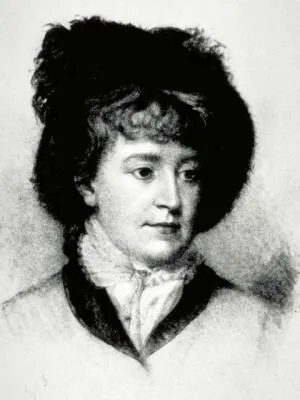 Photo: Frances Hodgson Burnett, via 1.bp.blogspot.com
Layered Themes: Stories that operate on multiple levels, allowing pupils to make increasingly sophisticated connections. Goodnight Mister Tom by Michelle Magorian rewards both surface-level and deeper inferential reading.
Scaffolding for Struggling Readers
Pupils who struggle with inference often benefit from additional structural support. Consider these scaffolding strategies:
The Inference Sandwich
Teach pupils to structure their thinking using this format:
- Bottom slice: What does the text actually say?
- Filling: What do I know from my own experience?
- Top slice: What can I work out by putting these together?
This concrete structure helps pupils organise their thinking whilst maintaining the essential components of effective inference.
Visual Thinking Maps
Create simple graphic organisers that separate textual evidence from personal knowledge, then provide space for pupils to record their inferences. This visual separation helps pupils understand that both elements are necessary for strong inferential thinking.
Assessment and Feedback Strategies
Assessing inferential thinking requires different approaches from literal comprehension marking. Focus on the quality of reasoning rather than predetermined "correct" answers. Strong inferences should:
- Draw on specific textual evidence
- Connect logically to pupils' background knowledge
- Demonstrate understanding of the text's broader context
- Show awareness of author's craft and purpose
Provide feedback that validates pupils' thinking processes whilst guiding them towards stronger textual connections. Instead of marking inferences as simply right or wrong, respond with questions that push thinking further: "I can see your reasoning here. What additional evidence from the text might support this inference?"
Moving Beyond the Classroom
The ultimate goal of inference instruction extends far beyond improved test scores or reading assessment results. Pupils who develop strong inferential reading skills become more sophisticated thinkers across all areas of learning.
They learn to read between the lines in historical sources, to interpret data in science investigations, and to understand subtext in social situations. These skills form the foundation for critical thinking that will serve them throughout their educational journey and beyond.
By implementing systematic approaches to inference instruction, teachers provide pupils with tools for unlocking the full richness of texts whilst developing the analytical thinking skills essential for academic success. The investment in explicit inference teaching pays dividends far beyond the literacy classroom, creating readers who engage deeply with texts and thinkers who approach information with appropriate scepticism and curiosity.