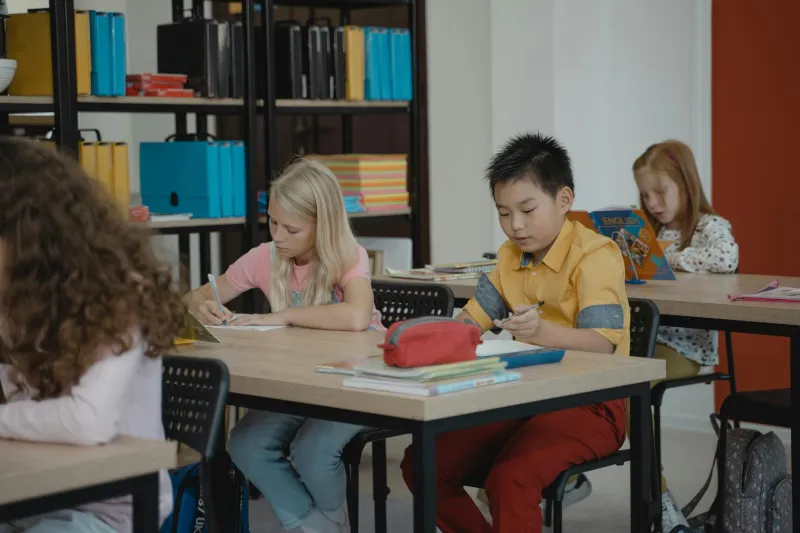
The sight is all too familiar: a Year 4 pupil staring at their writing, pencil hovering uncertainly over the page, wondering where to place that elusive comma. Despite countless lessons on punctuation rules, many KS2 children continue to scatter full stops like confetti or avoid commas altogether. Yet what if the solution lies not in more grammar worksheets, but in helping children feel punctuation through the natural rhythms of speech?
The Disconnect Between Rules and Reality
Traditional punctuation instruction often treats these vital marks as abstract symbols to be memorised and applied according to rigid rules. Children learn that commas separate items in a list or that full stops end sentences, but they struggle to apply this knowledge when crafting their own narratives or explanations. The disconnect stems from a fundamental oversight: punctuation evolved from speech, serving as visual cues for the pauses, emphasis, and intonation that naturally occur in spoken language.
When we divorce punctuation from its oral origins, we rob it of its inherent logic. Children who can tell a captivating story aloud, complete with dramatic pauses and rising excitement, suddenly lose this natural rhythm when they pick up a pen. The challenge for KS2 teachers lies in bridging this gap between the fluent speaker and the hesitant writer.
The Breath as Teacher
Consider how we naturally pause when speaking. These pauses aren't arbitrary—they occur at meaningful grammatical boundaries, allowing listeners to process information and anticipate what comes next. When children learn to recognise these natural breathing points in their own speech, they begin to understand where punctuation belongs on the page.
Start with simple breath-mapping exercises during guided reading sessions. As pupils read aloud, encourage them to notice where they naturally pause for breath. Mark these spots with small pencil marks, then compare them to the punctuation in the text. Most children are surprised to discover how closely their breathing aligns with the author's punctuation choices.
This revelation transforms punctuation from a mysterious code into a logical system that mirrors their own speaking patterns. Suddenly, the comma isn't an abstract mark to be sprinkled randomly—it's a gentle pause that helps readers navigate the sentence's meaning.
Movement and Meaning
Physical movement can make punctuation concepts even more concrete. Try the 'punctuation walk' with your class: as children read a passage aloud, they walk steadily for regular text, pause briefly for commas, stop completely for full stops, and change direction for question marks. This kinaesthetic approach helps pupils internalise the different weights and functions of various punctuation marks.
For younger KS2 pupils, clapping rhythms work wonderfully. Read a sentence with natural expression whilst clapping softly on unstressed syllables and firmly on stressed ones. Pause for punctuation marks, with shorter pauses for commas and longer ones for full stops. Children quickly begin to hear the musical quality of well-punctuated prose.
Dialogue as Gateway
Direct speech offers perhaps the clearest connection between oral language and punctuation. When children perform scripted dialogues, they naturally adjust their voices for different speakers, pause at sentence boundaries, and emphasise important words. These vocal choices map directly onto punctuation conventions.
Create opportunities for pupils to write and perform their own dialogues. Begin with familiar scenarios—ordering at a café, asking for directions, or arguing about favourite football teams. As children rehearse these conversations, they begin to understand how speech marks capture the boundaries between speakers, how commas indicate natural pauses within speech, and how exclamation marks reflect vocal emphasis.
Record these performances and play them back whilst following the written script. This dual-sensory experience reinforces the connection between sound and symbol, helping pupils understand that punctuation serves readers by preserving the writer's intended voice.
Poetry as Punctuation Playground
Poetry offers unique opportunities to explore punctuation flexibility. Unlike prose, where conventions are relatively fixed, poetry allows for creative punctuation choices that serve meaning and mood. Share poems by contemporary British poets like Michael Rosen or Carol Ann Duffy, discussing how their punctuation choices affect the reading experience.
Encourage pupils to experiment with their own poetry, trying the same verse with different punctuation patterns. How does removing all punctuation change the reading? What happens when every line ends with an exclamation mark? These explorations help children understand that punctuation isn't merely decorative—it's a powerful tool for controlling meaning and emotion.
Assessment Through Performance
Traditional punctuation assessments often focus on identifying errors in isolated sentences. Whilst this has its place, consider also assessing pupils' punctuation understanding through performance. Ask children to read their own writing aloud, noting where their natural speech patterns align with or diverge from their punctuation choices.
This approach reveals much more than a worksheet ever could. A pupil who reads a poorly punctuated sentence with perfect expression clearly understands the underlying grammar—they simply need support in translating their oral competence into written form.
Building Confidence Through Connection
When children discover that they already possess an intuitive understanding of punctuation through their speaking abilities, their confidence soars. They begin to see themselves as competent language users rather than struggling rule-followers. This shift in self-perception often marks the turning point between mechanical punctuation and purposeful writing.
The key lies in making these connections explicit and celebrating the linguistic knowledge children bring from their everyday speech. Every KS2 pupil arrives in your classroom already fluent in the rhythms and patterns that underpin punctuation—our job is simply to help them recognise and apply this existing expertise.
Sustaining the Connection
Integrating physical reading practices into regular literacy instruction doesn't require dramatic curriculum changes. Simple adjustments—encouraging expressive reading during guided sessions, incorporating movement into grammar lessons, or discussing punctuation choices during shared writing—can maintain these vital connections between speech and text.
The investment pays dividends not only in improved punctuation accuracy but in overall writing fluency. Children who understand punctuation as a natural extension of speech write with greater confidence and clarity, crafting texts that truly communicate with their intended readers.
By grounding punctuation instruction in the physical experience of language, we honour the connection between speech and writing whilst giving KS2 pupils the tools they need to punctuate with genuine purpose and understanding.